

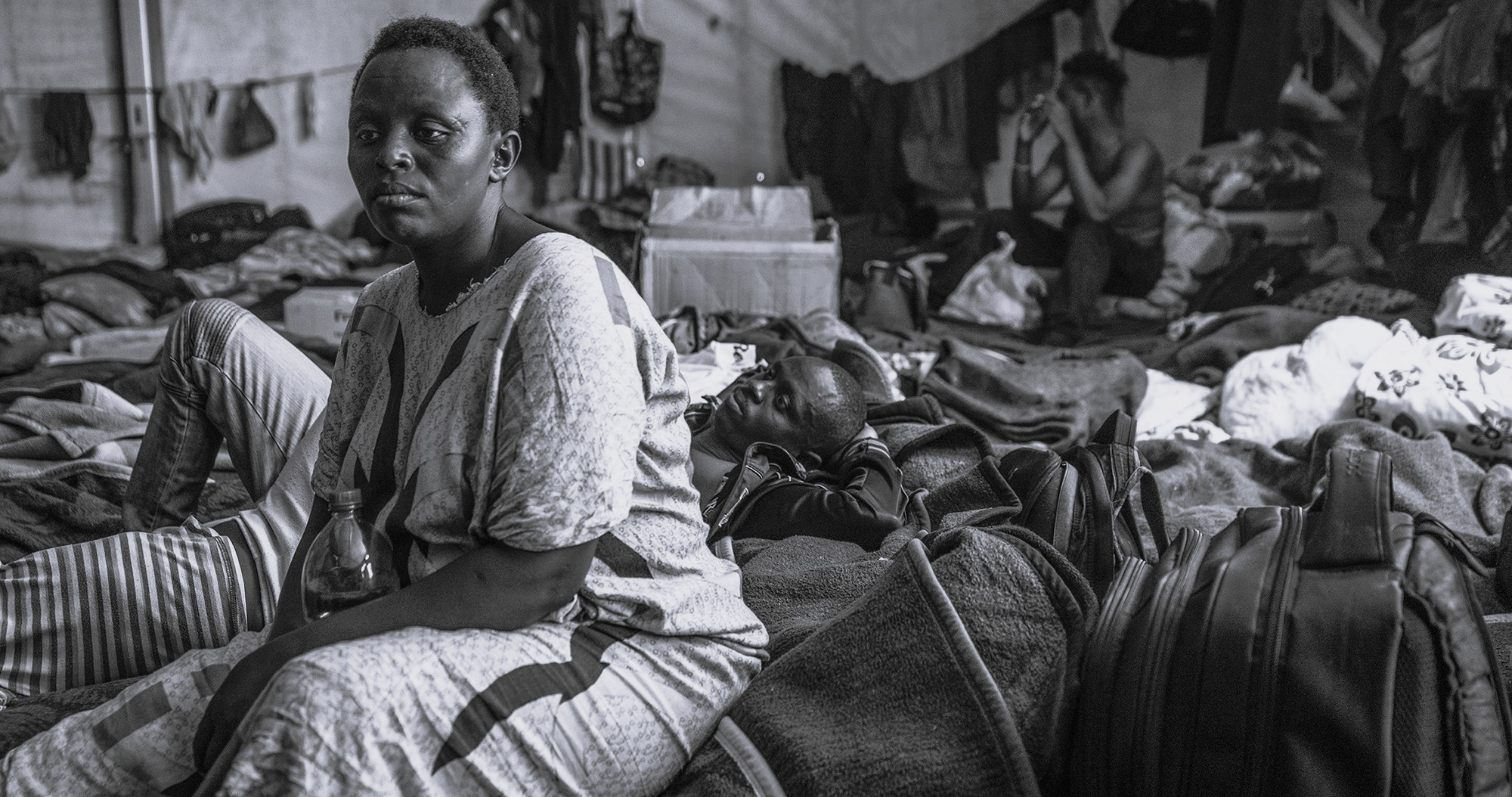
Navigating Livelihood and Belonging: The Everyday Realities of African Migrant Women in Cape Town
“When I hear the word Home Affairs I run the other way.” – Patricia, a Zimbabwean migrant woman
Patricia’s words capture both a personal fear and a systemic reality. They reflect not only individual frustration with bureaucracy, but also what it means to navigate institutions that, for many African migrant women in South Africa, become sites of uncertainty, exclusion, and humiliation.
Women who cross borders in search of safety, stability, and opportunity often do so after leaving behind conflict, poverty, and disrupted families. Yet arrival in Cape Town frequently brings a new set of challenges. These include a social environment shaped by xenophobia, a bureaucratic system marked by inefficiency and arbitrariness, a labour market that excludes them, and a daily struggle for recognition of their rights. Such experiences are not recent or isolated but are situated within a long historical arc. South Africa’s immigration landscape has been structured by colonial and apartheid systems that produced racialised hierarchies of belonging, movement, and labour. These legacies did not end in 1994; they continue to surface in contemporary policies, institutional practices, and everyday social attitudes that reproduce exclusion. These experiences are often intensified for women through the intersection of migrant status, gender, and class, which together shape layered forms of oppression and marginalisation (Crenshaw, 1989; 1991; Akinola, 2017).
This study aimed to understand how African migrant women in Cape Town navigate these realities. Rather than focusing solely on socio-economic marginalisation, it examined how these women build lives, sustain livelihoods, and construct a sense of belonging in a city that so often renders them invisible. Drawing on in-depth interviews and a focus group with twelve women from Zimbabwe, the Democratic Republic of Congo, Burundi, and Malawi, the research foregrounds voices that remain underrepresented in dominant migration narratives in South Africa.
The Everyday Face of Xenophobia
Xenophobia in South Africa is not only the dramatic, large-scale violence that attracts media attention. For migrant women, it is also a daily, grinding experience: being called makwerekwere on the bus, being told to ‘go back to your country’ in their neighbourhood, being refused service at a clinic, or being shouted at by a Home Affairs official. This quieter, persistent form of hostility accumulates over time and shapes every dimension of women's lives, from where they choose to live and how they move through the city, to which jobs they can access and whether they feel safe to speak their home language in public.
“If I'm not hearing those comments in my neighbourhood, then I'm hearing them on the bus or taxi. It never stops.” – Patricia, Zimbabwean migrant woman
For migrant women who speak with an accent or do not speak isiXhosa, exclusion from social and economic spaces was a recurring experience. Language often operated as a tool of othering, from healthcare workers refusing to communicate in English to the use of the term makwerekwere in everyday interactions to signal non-belonging and deny equal rights and respect. Institutional settings were often no safer. At public health facilities, some women described being dismissed, humiliated, and denied urgent care on the basis of their foreign nationality, reflecting what scholars have termed ‘medical xenophobia’ (Crush and Tawodzera, 2014). At Home Affairs, participants described officials who shouted, refused to answer basic questions, and treated migrants with contempt. One participant recounted being threatened with arrest at the hospital where she had just given birth, while her newborn remained in the nursery.
Documentation as a Barrier, Not a Bridge
Access to documentation, including asylum seeker permits, refugee status, and identity documents, is supposed to be the gateway through which migrants access rights, employment, healthcare, and legal protection. In practice, the Department of Home Affairs routinely fails to deliver this gateway in a timely, fair, or humane way. Women often described waiting years, and in some cases decades, for documentation to be processed. Delays in permit issuance or renewal restricted access to bank accounts, formal employment, and contractual work. This often pushed women into informal, contract-free labour arrangements that offered no benefits or legal recourse in cases of exploitation.
“They're telling us that with these papers you can work and you can study, but it's not like this.” – Isabelle, Congolese asylum seeker
This gap between what the law promises and what women actually experience is not a minor administrative inconvenience. It constitutes a form of structural violence in which individuals are trapped in prolonged legal limbo and denied access to essential services and the resources needed to secure stable and sustainable livelihoods. This condition further exposes them to exploitation by employers, who are often aware that undocumented or precariously documented women have limited capacity to assert their rights or contest abusive working conditions.
More Than Survival: Women’s Resourcefulness and Agency
This research draws on Saba Mahmood’s (2011) conceptualisation of agency as something that emerges within conditions of constraint. In this formulation, agency refers to the skills and everyday practices people develop in order to act within unequal, limiting, and at times oppressive circumstances. Rather than being understood as freedom from constraint, it is expressed through negotiated and situated forms of action.
Women described learning when to be visible and when to blend in, which routes to take to work to minimise the risk of violence, how to carry their bags to reduce the likelihood of theft, and which neighbourhoods offered greater safety for migrants. Some, like Grace, paid higher rent to live in safer areas, making calculated trade-offs between economic cost and safety. Mary, who ran a tailoring business from her home, operated behind closed doors to avoid being identified and targeted as a foreign national entrepreneur.
In workplaces where they faced exploitation or abuse, some women described using emotional labour as a deliberate strategy, performing composure and contentment. While doing so, they quietly built the savings and networks needed to transition out of such conditions. Patricia spent three years in an abusive domestic work environment before securing better employment, supporting herself in the interim by also selling goods independently. Her own words capture the spirit many women expressed:
“You think you are stuck but there is always a way. We just go there and keep trying.” – Patricia, Zimbabwean domestic worker
Women also pushed back against the stereotypes often used to justify their exclusion. Several participants firmly challenged the assumption that migrants are desperate individuals willing to accept any conditions, or that they intend to settle permanently in South Africa. Many expressed a strong desire to return home once they had accumulated sufficient economic capital, thereby challenging dominant narratives that depict migrants as permanently seeking to drain national resources.
Finding Home in Unlikely Places: Belonging Beyond Borders
A key finding of this research is the creativity and resilience with which migrant women construct belonging in a city that continually signals their exclusion. This belonging is not about legal status or national identity; it is built through relationships, shared stories, mutual care, and everyday acts of solidarity. For many women, the Scalabrini Centre of Cape Town was a crucial anchor. Its Women’s Platform Programme, which combines skills training, personal development, English-language learning, and group discussion, provided not only practical tools but a rare space where women could feel recognised, supported, and equal. Women described the organisation as a second home, a place where they could laugh, ask questions, and connect with others who understood their situation.
“I’m not working, so every day I’m here because I can feel, I can meet people. I can laugh, I can talk, and I can ask questions.” –Isabelle, Congolese asylum seeker
Churches played an equally important role for many participants, providing emotional support, practical assistance including food, accommodation, and financial aid, and communities of genuine acceptance. Adele described her church as the one space in Cape Town where “they don’t look at you differently, you just feel welcome, at home.”
Beyond formal institutions, women built belonging through transcultural friendships with people from other countries, through relationships with South African neighbours who protected them during periods of anti-immigrant unrest, and through the chosen family bonds they formed with employers and community members. Nyasha’s South African neighbours told her during a period of xenophobic threat: “You’re not going anywhere, we have got you.” Repeated acts of solidarity constitute the building blocks of belonging for women who remain excluded from legal and civic belonging.
What This Means for Practitioners and Policymakers
For NGOs and civil society organisations, the combination of economic support and psychosocial care remains essential. Emotional well-being, trust-building, and spaces of recognition are closely tied to women’s ability to sustain livelihoods. Continued paralegal and documentation support is also critical, given the persistent gap between legal entitlements and women’s lived experiences.
For healthcare providers, addressing medical xenophobia is urgent. While the right to healthcare applies to all residents regardless of nationality, access is often shaped by institutional bias and individual discretion. This requires approaches that actively affirm migrant patients’ rights and ensure reliable language support, rather than allowing exclusion through communication barriers.
For government and policymakers, improving documentation systems at the Department of Home Affairs is a human rights priority with direct consequences for safety, dignity, and economic participation. This includes reducing delays, improving transparency, and strengthening accountability. More broadly, political narratives that frame migrants as threats contribute to everyday xenophobia, while policies that enable legal status and access to services strengthen wider social inclusion.
About the Author:
Tamina Steppe is a sociologist who completed her Master's degree at Stellenbosch University in 2025. Her research focuses on gender, migration, belonging and social justice, with particular attention to the lived experiences of African migrant women in South Africa. The research was mainly conducted through the Scalabrini Centre of Cape Town. Tamina holds additional academic experience from Leiden University and the Venice International University.
Full dissertation available at: https://scholar.sun.ac.za/items/28dd0ce1-bbae-4bff-ae5f-cb211ab251d9
Image by Daily Maverick
References:
Akinola, A.O. 2017. South Africa and the Xenophobia Dilemma: A Gendered Perspective. Gender & Behaviour, 15(3): 9739–9751.
Crenshaw, K. 1989. Demarginalizing the intersection of race and sex. In K. Maschke (ed.), Feminist Legal Theories. Routledge.
Crenshaw, K. 1991. Mapping the margins: intersectionality, identity politics, and violence against women of color. Stanford Law Review, 43(6): 1241–1299.
Crush, J. & Tawodzera, G. 2014. Medical xenophobia and Zimbabwean migrant access to public health services in South Africa. Journal of Ethnic and Migration Studies, 40(4): 655–670.
Mahmood, S. 2011. Politics of Piety: The Islamic Revival and the Feminist Subject. Princeton University Press.
Categories:
Tags:
- Undocumented Migrants
- Intersectionality
- Gender Studies
- Immigration
- Cape Town
- Refugees
- Asylum Seekers
- Human Rights
- Xenophobia
- Migration
- Human Rights Migrants
- Immigration Policy South Africa
- Medical Xenophobia
- Scalabrini Centre Cape Town
- Migrant Women Stories
- Xenophobia In South Africa
- Department Of Home Affairs SA
- South Africa Immigration
- Cape Town Migration
- African Migrant Women